
222Rs Explained: What the App Actually Does Before You Deposit a Rupee
A lot of people search for 222Rs already, half convinced it’s either a scam or a shortcut to easy money. It’s neither. It’s a color prediction app, one of dozens circulating in Pakistan right now, and the honest answer sits somewhere between those two extremes.
This article walks through what the app does, how the money side works, what’s inconsistent across different sources, and what’s worth checking before you install it or put in a deposit. It’s longer than most guides you’ll find on this topic, because the short version leaves out exactly the details that matter.
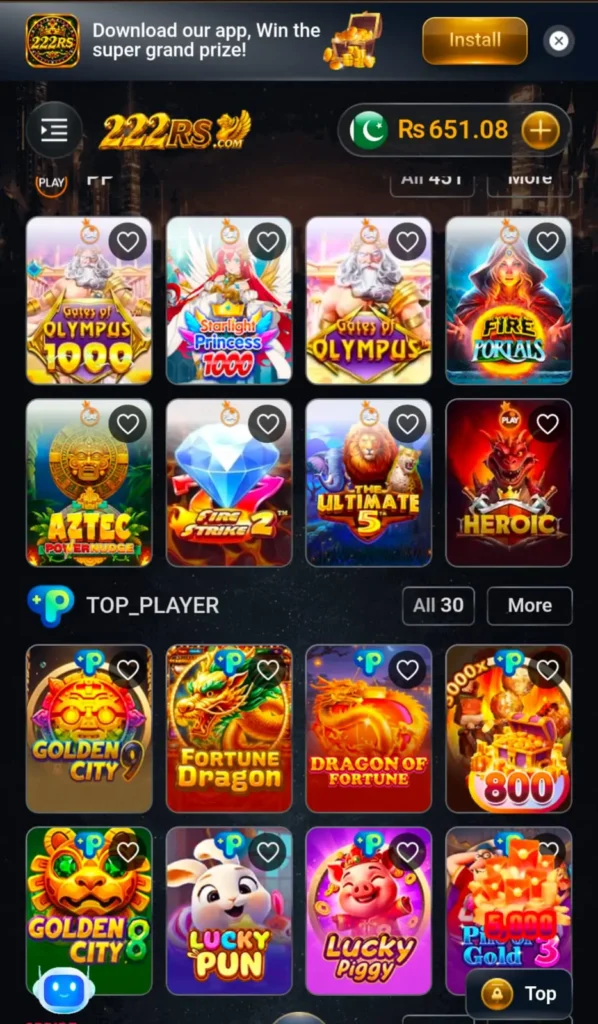
What 222Rs actually is
222Rs runs on a simple mechanic. You register with a phone number, deposit money through a local payment method, and place small predictions on the outcome of a color or number round. Each round lasts a minute or two. You pick before the timer ends, the round closes, and a result is generated. Correct predictions pay out based on odds. Wrong ones don’t. That’s the entire game underneath all the branding and bonus talk.
It’s not available on the Google Play Store. Like most apps in this category, it’s distributed as a direct APK file through third-party websites. That single fact shapes almost everything else in this guide, because it means there’s no centralized review process, no single verified source, and no guarantee that two websites offering the “222Rs APK” are actually distributing the same file. It also means the usual safety net you get from installing something through an app store simply isn’t there. You’re the one doing the checking.
Why the download step needs more attention than people give it
Different sites promoting 222Rs list different version numbers and file sizes for what they each claim is the current version. That’s common across this whole category of app, not specific to 222Rs, but it’s still worth taking seriously rather than shrugging off. A mismatch like that usually means one of a few things. The sites could be hosting genuinely different releases. One listing could simply be outdated. Or, in the case worth taking most seriously, a site could be distributing a repackaged file under the same name and branding.
Before downloading anything, check the domain carefully rather than trusting labels like “official” or “verified.” Those words don’t mean anything on their own, since any page can use them regardless of whether they’re true. What actually matters is whether the download page tells you the version number, file size, and update date. A page with none of that information is a page worth being cautious about, even if the layout looks polished and professional.
Avoid APK links shared through WhatsApp groups you don’t personally know the admin of, Telegram channels with no clear ownership, pop-up ads, and shortened links that hide where they actually lead. These are the most common channels through which a modified or tampered file gets passed off as the real thing. If you’ve found a source you trust, stick with it for future updates instead of switching to a different domain each time you’re looking for the “latest version.”
To install the file, you’ll need to enable “Install Unknown Apps” in your phone’s settings for the browser or file manager you’re using. Go to Settings, then Security, then find that option and turn it on for the specific app you’re using to install the file. This permission applies only to that one app, not your entire device, so switching it back off once installation finishes is a small habit worth keeping.
Once downloaded, let Google Play Protect scan the file before opening it. Most Android phones do this automatically, but you can also run a manual scan through the Play Store app. Be clear about what that scan actually tells you, though. A clean result means the file isn’t flagged as known malware. It says nothing about whether the platform behind it pays out reliably or handles your money responsibly. Those are two separate questions, and a lot of guides blur them together in a way that gives people false confidence.
If installation fails, the usual causes are low storage space, an outdated Android version, or a corrupted download. Clearing space and re-downloading the file on a stable connection fixes most of these. A “parse error” almost always means the file didn’t download completely, so deleting it and starting over solves it. If Play Protect blocks the install outright, take that seriously rather than clicking past it. That warning is one of the few actual safety checks available to you as an outside user.
How registration and login work
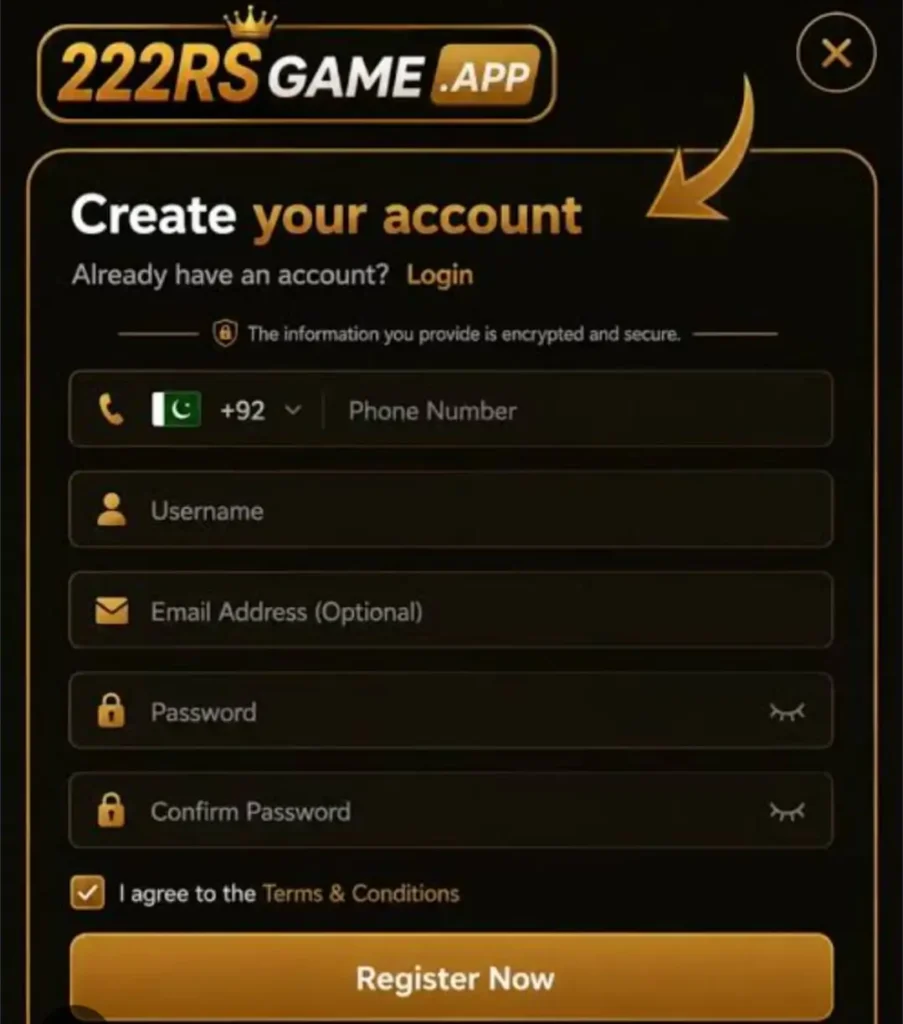
Signing up asks for a phone number, an OTP sent by SMS, and a password. If you have a referral code, there’s usually a field for it during signup, and it typically only works if entered at that point, not added afterward. Use a password you don’t already use for banking apps or other financial accounts, and save your login details somewhere secure right after registering, since account recovery on apps like this tends to be slower and more limited than what you’d get from a bank.
After that, logging back in is standard. Enter your phone number and your password, and complete an OTP step if the app asks for one, which usually only happens on a new or unrecognized device. The most common login complaint across apps like this is a delayed OTP, and it’s usually a network issue on the SMS delivery side rather than a problem with the app itself. Waiting a minute and using the resend option once solves it most of the time. Repeatedly requesting new codes back to back can actually trigger a temporary lock instead of speeding things up.
If your password stops working even though you’re confident it’s correct, check for autocorrect or Caps Lock quietly changing what you typed before assuming something’s wrong with your account. If you do get locked out after several failed attempts, most platforms release that lock automatically after fifteen to thirty minutes. Continuing to retry during that window usually resets the timer rather than clearing it, so waiting it out is faster than fighting it.
There’s no strategy that reliably beats a randomized prediction game, no matter what anyone selling a “winning formula” or a “pattern system” tells you. Broader predictions, like betting on a single color, carry better odds and lower payouts. Narrower predictions, like an exact number, pay more but are much harder to hit. That trade-off is the entire structure of the game, and it’s the same structure used across nearly every color prediction app in this space, not something specific to 222Rs.
Some versions of the app include secondary modes beyond basic color prediction, like lottery-style draws, though what’s actually available can differ depending on which version you’re running. Results are generated algorithmically, which is standard for this type of app, but it also means fairness can’t be independently checked by an outside user. You’re trusting the platform’s own system, the same way you’d trust any digital lottery draw you can’t personally audit.
If you’re trying a game mode for the first time, use the smallest prediction amount the app allows. That’s not a strategy for winning. It’s the cheapest way to understand how the round timing and payout structure actually behave before you commit real money to it.
Deposits, withdrawals, and where things usually go wrong
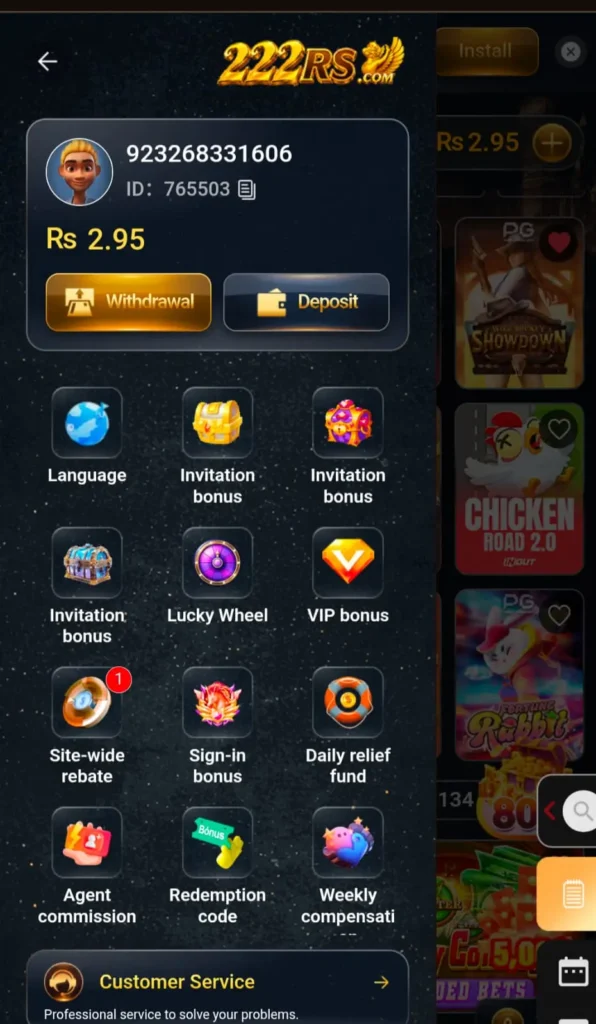
Deposits go through EasyPaisa, JazzCash, or bank transfer where available, and the process is usually smooth, since accepting money is the easy part for any platform. You select a method, enter an amount, and confirm the transaction through your payment provider’s own app, not inside 222Rs directly. Once it’s done, check that the deposit reflects in your balance before closing the app, and keep a screenshot of the confirmation just in case.
Minimum deposit amounts and any fees are set by the platform and can change without notice, so don’t rely on a figure you read on a promotional website. Check the actual number shown on the deposit screen inside the app at the time you’re making the transaction. Starting with the smallest amount allowed, even if a larger deposit is technically permitted, gives you a low-cost way to confirm the deposit works correctly and to test a withdrawal before putting in more.
Withdrawals are where problems tend to show up, and this is true across this entire category of app, not specific to 222Rs. Delays, requests stuck in a pending state, and withdrawal thresholds that weren’t clearly stated upfront are the most common complaints you’ll find in reviews and forum posts about apps like this. Processing times advertised by the platform or by websites promoting it are claims, not guarantees, and actual timing can shift depending on the payment method, the amount, and how much load the platform is under.
A lot of withdrawal issues trace back to bonus funds with conditions attached. If part of your balance came from a signup bonus or a referral reward, there may be a wagering or turnover requirement before that money becomes withdrawable, and it’s not always explained clearly at the point you received it. Before assuming a stuck withdrawal is a bug or a sign the platform is holding your money unfairly, check whether a bonus condition is the actual cause. It usually is.
If a withdrawal sits pending well past the stated timeframe, don’t panic, but don’t ignore it either. Screenshot the request and note the transaction ID, then contact support through the app directly. Submitting the same request again usually complicates resolution rather than speeding it up, since it can create confusion about which request is the active one.
Bonuses and referrals
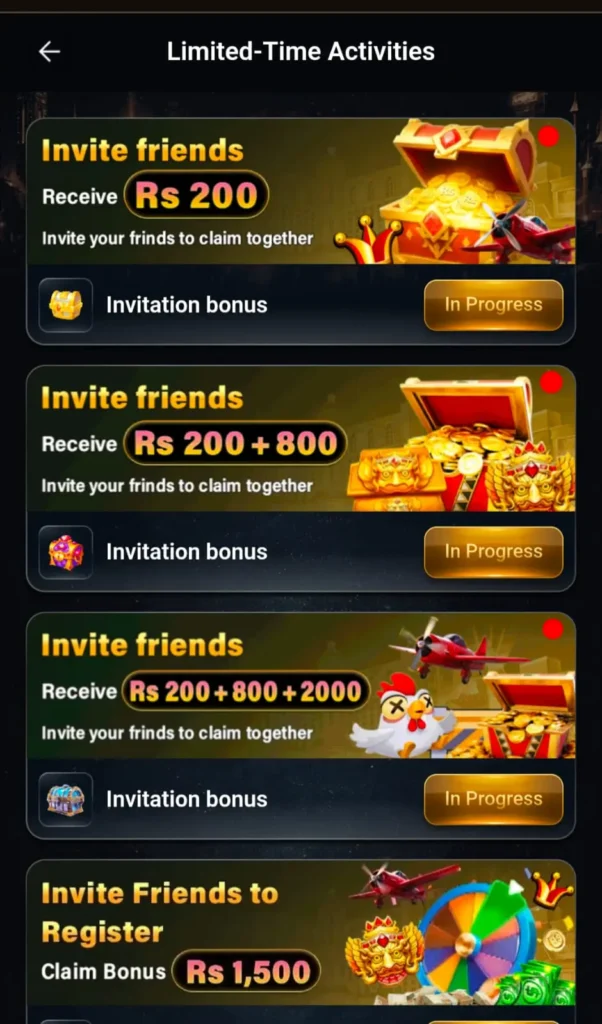
A referral system is commonly advertised, where you earn a percentage or fixed amount when someone signs up using your code and makes a deposit. The mechanics work the way referral systems generally do across this category of app. What varies is the exact bonus amount, whether a minimum deposit is required to unlock it, and any cap on total referral earnings. Check the current terms inside your specific version of the app rather than trusting a number from a promotional page, since these details differ across sources the same way version numbers and file sizes do.
Be especially cautious of referral codes shared alongside specific income promises, like a guaranteed amount within a set number of days. The referral code itself might be completely legitimate while the marketing wrapped around it is exaggerated well past what actually happens for most users. A bonus is worth something only once you’ve actually managed to withdraw it. Until then, treat it as a number on a screen, not money in hand.
Is it legal, and should you trust it
Color prediction apps like 222Rs operate in a legal gray area in Pakistan. There’s no regulatory body overseeing them specifically, and no license to check or verify. That doesn’t automatically mean using one is illegal, but it does mean there’s no formal channel to appeal to if a dispute comes up over a denied or delayed withdrawal. You’re relying entirely on the platform’s own goodwill and internal processes, not on any outside protection.
There’s also no independently confirmed information about who actually develops or operates 222Rs. Different sources list different details, and none of it can be verified the way you could verify a registered company or a licensed financial service. That gap doesn’t prove anything is wrong. It just means the responsibility for caution sits with you, not with any oversight body standing behind the platform.
Treat 222Rs the way you’d treat any unregulated platform handling real money. Start with a small deposit. Test a small withdrawal before trusting it with anything larger. Keep records of every transaction, including screenshots and reference numbers. And don’t put in more than you’re fully prepared to lose completely, since that’s the realistic worst case with any app in this category.
What this actually comes down to
222Rs isn’t uniquely dangerous or uniquely trustworthy compared to other color prediction apps in this space. It behaves the way most of them do. Some users deposit, play, and withdraw without any issue at all. Others run into delays, unclear bonus terms, or a withdrawal that takes longer than expected. Neither outcome is guaranteed for you personally, and no article, including this one, can tell you in advance which one you’ll get.
What you can actually control is how carefully you check the download source before installing anything, how much you risk before you’ve confirmed the platform behaves the way it claims to, and whether you test a small withdrawal early instead of assuming it’ll work smoothly when it matters most. That’s not a guarantee of a good outcome. It’s just the most reasonable way to approach a platform that operates without much oversight and asks you to trust it with your money anyway.
Conclusion
222Rs works the way most color prediction apps in Pakistan work. It’s not a guaranteed way to earn money, and it’s not a scam by default either. It sits somewhere in between, and where your own experience lands depends more on how carefully you check the download source, how much you risk before testing a withdrawal, and whether you read the actual terms behind any bonus you’re counting on. No app in this space can promise a specific outcome, and any page telling you otherwise is worth being skeptical of. Start small, keep records of every transaction, and let your own results, not marketing claims, decide how much trust you put into it going forward.
Frequently Asked Questions
No. It’s distributed only as a direct APK file through third-party websites, which is why installing it requires enabling “Install Unknown Apps” on your phone.
Color prediction apps like 222Rs operate in a legal gray area. There’s no regulatory body overseeing them and no license to verify, though that alone doesn’t make using one illegal.
Minimum deposit amounts are set by the platform and can change without notice. Check the current figure on the deposit screen inside the app rather than relying on what a promotional website states.
Delays are usually caused by platform load, an undisclosed minimum withdrawal threshold, or a wagering requirement tied to bonus funds. Genuine technical faults are less common than these three causes.
The referral system itself typically works as described, but the exact amount, minimum deposit requirement, and any cap on earnings vary by version. Check the terms inside the app rather than trusting a promotional page, and treat any bonus as real only once you’ve actually withdrawn it.